

I didn’t tell anybody when I got laid off.
I felt ashamed. I hadn’t processed it myself, and I wasn’t ready to explain it to other people.
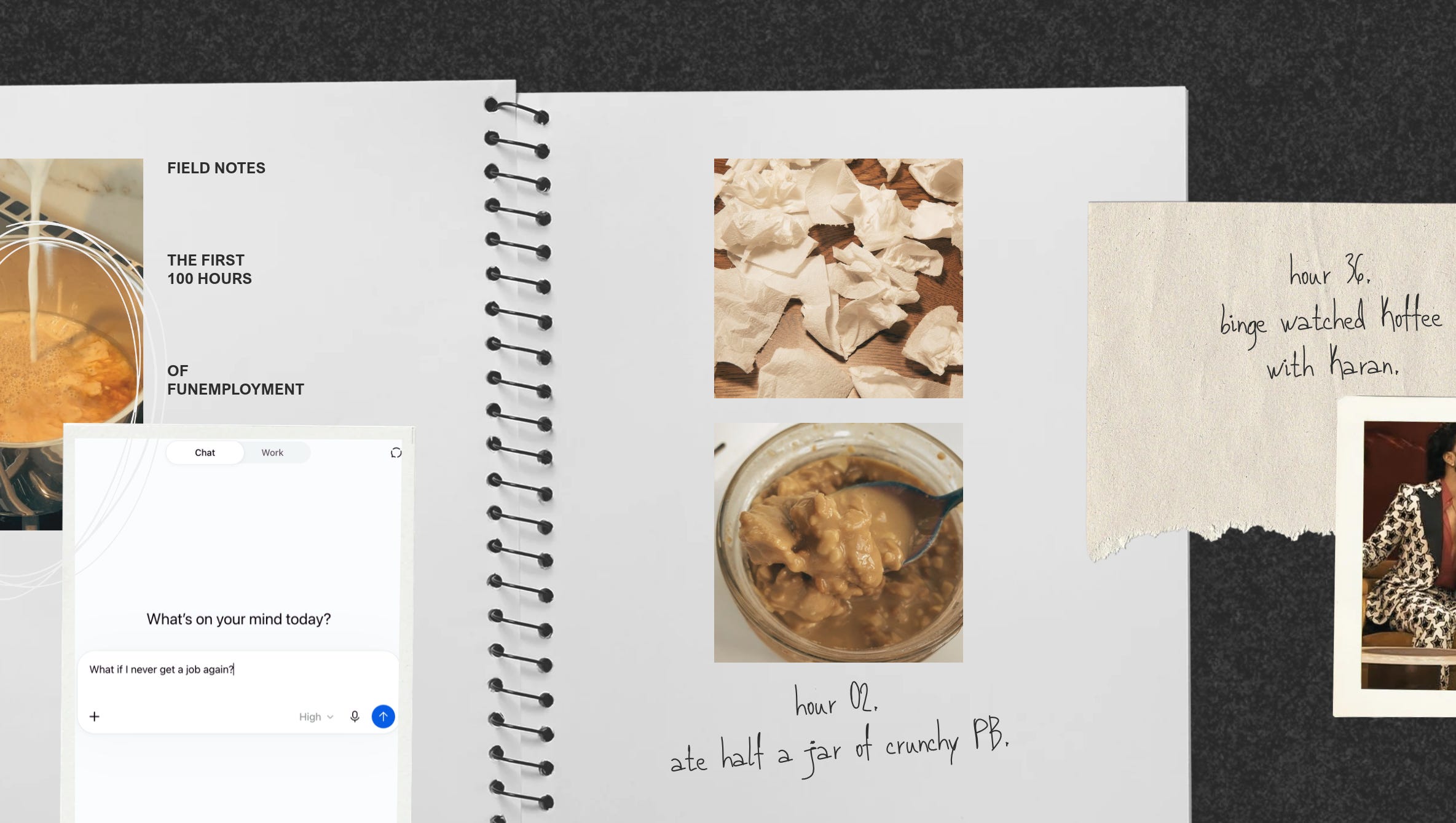
So I took a hot shower, ate half a jar of crunchy peanut butter and cried.
Then I remembered the peanut butter cost $13.99. Thought about how I probably couldn’t afford $13.99 peanut butter anymore. Cried more.
I really don’t know who came up with “funemployment.”
so, how did we spend the time?
I had a one-to-one “therapy session” with ChatGPT. Basically, I typed everything I wasn’t ready to say out loud into the chat.
Then I started drafting my compensation negotiation response. I was upset, but I still wanted to discuss the terms.
Ate more peanut butter. Cried again.
Made myself some chai and binge-watched Koffee with Karan (iykyk).
At some point, I decided to ask ChatGPT to build my dream-body workout plan. Because apparently this was also going to be the week I got into the best shape of my life.
I then knocked out for eight hours after crying.
So that was going well.
I’m writing this looking back, and I want to be honest about what those first days were like. I wasn’t immediately excited about the possibilities. I wasn’t booking a one-way flight. I liked my job. I liked getting paid. I wanted to know what I was going to do next.
I had savings and an emergency fund, which I was very lucky to have. That made a huge difference. But I was still scared, even with money set aside for exactly this kind of situation.

then I left the house
I walked to my favorite coffee shop and ordered a coffee.
Halfway through drinking it, I thought, I probably shouldn’t have spent $7 on this. I’m unemployed.
Then I wished I hadn’t thought about how much I’d spent on the coffee, because I had been enjoying it until that point.
The money was already spent. Could I at least finish the thing in peace?
But the walk helped. Getting out of the house helped. Movement helped, even when it was just walking somewhere familiar to sit with a coffee and overthink.
Baby steps. Quite literally.
I didn’t need to start the entire workout plan that day. I needed to get dressed and go outside. That felt doable.
And once I’d done one small thing, it was a little easier to do another.
I tried the journaling thing
I sat down to journal and manifest, and realized I didn’t particularly want to put good vibes out there.
I was upset. I had questions. I wanted to write about what was actually happening without needing to make it sound like the best thing that had ever happened to me.
So I decided to journal out loud.
Anonymously, because, you know, a girl’s still gotta get a job. And tbh, being an influencer or full-time content creator sounds exhausting.
I wasn’t trying to turn this into an “I quit corporate to follow my dreams” story. I hadn’t quit. And plenty of my dreams still involved a salary and employer-sponsored health insurance.
But I did want somewhere to share what I was figuring out. The useful things, the embarrassing things, the things I would normally send to a friend with “please tell me you’ve done this too.”
That’s how The Firsts Club started.
There will be books, travel, coffee shops, movement and plenty of other firsts. Being laid off is where this story begins, but I have other things I’d like to talk about.
For now, though, here’s the practical part.
what actually needs your attention
Eventually, I sat down to look at my money, spending and obligations. I needed to know what I was working with.
This isn’t a list of everything I managed to do in those first hundred hours. It’s a starting point for anyone dealing with the same thing. Pick what’s relevant to you.
And please don’t treat the title as a deadline.
1. Get the paperwork and dates together.
Ask HR to confirm your last day, final pay, any severance terms and response deadline, and when your health coverage ends.
Keep the documents together and put the important dates in your calendar. Write down anything you still need an answer to.
If you don’t understand something you’re being asked to sign, get it explained before you agree to it. You don’t have to pretend the language makes sense just because it’s in an official-looking PDF.
2. Look at your actual money.
What cash and savings can you access? What payments are you expecting, and have the amounts and timing been confirmed?
Then list what needs paying: rent, food, utilities, health costs, required payments and anything else you’re committed to. Include bills that don’t come every month and costs that might change now that you’re no longer employed.
From there, you can work out what to pause or cut back on, and estimate how long your available money could cover your expenses. Write down your assumptions so you can update them as you get more information.
I needed to understand the bigger picture. Spiraling over individual purchases wasn’t giving me that.
Although I did give the coffee considerable attention.
3. Find out when your health insurance ends.
Get the date confirmed. Then compare the options available to you, including the full cost, when coverage would start, whether your doctors and prescriptions are covered, and enrollment deadlines.
For U.S. readers, HealthCare.gov’s guide to losing job-based coverage is a useful place to start. Your employer or plan administrator can answer questions about your existing coverage.
This is one of those things where it’s worth writing your questions down before you call. Otherwise, you hang up and immediately remember why you called.
4. Check unemployment eligibility.
USA.gov’s unemployment benefits guide points you toward the relevant state program. Check eligibility, how to apply and any ongoing requirements directly with that program.
Don’t assume you do or don’t qualify based on what happened to a friend. Their circumstances may be different.
The benefits information here is U.S.-focused and general. Confirm the rules and deadlines for your own situation.
5. Give yourself something manageable to do tomorrow.
Maybe it’s sending the email to HR. Maybe it’s looking at your accounts or gathering the paperwork.
Do that, then take a break.
For me, movement helped. I could go for a walk even when I didn’t know what I wanted the next few months to look like. I could make chai. I could write down a question and try to get an answer.
You don’t need to fill the entire day to feel like you’ve done enough. And you don’t need to use the time to become a completely new person.
I had already asked ChatGPT for a workout plan. Let’s not add a full personality overhaul.
that was enough to start
I wish I could say I stopped worrying once I had a spreadsheet. I didn’t.
But having the information helped. So did getting outside and moving a little. Writing honestly helped more than trying to make myself feel positive about something I was still upset about.
I wasn’t ready to tell people at first. If that’s where you are, I get it. Explaining it can feel like a whole additional thing to deal with.
You can want your job back. You can be grateful you have savings and still worry about money. You don’t need to be excited about your “next chapter” just because somebody calls it that.
Start with what you need today. Get one answer. Go for a walk if you feel up to it.
And if you get a coffee, I hope you manage to enjoy the whole thing.
The Firsts Club